Main Product
Contact
 Address:Zhengzhou city in China.
 Phone:0086-371-86151827
 Email:


How to Choose the Right Cutting Method Based on Steel Plate Thickness
Walking into a fabrication shop, you'll quickly notice that no single cutting machine handles everything. The thickness of your steel plate largely dictates which process makes sense—and getting this decision wrong can mean blown budgets, missed deadlines, or parts that simply don't fit.
For thin gauge material, typically under a quarter inch, laser cutting is hard to beat. The speed is blistering, the edge quality is excellent, and nesting software packs parts tightly to minimize waste. Fiber lasers breeze through this range with minimal heat input, so distortion is rarely a concern. If your parts have delicate features or require welding-ready edges right off the machine, this is your answer.
Things shift when you move into the mid-range, roughly between a quarter inch and one inch. Here, plasma cutting becomes genuinely competitive. Modern high-definition plasma systems deliver impressive cut quality at a fraction of the laser's operating cost on thicker stock. You trade a slightly wider kerf and some edge taper for significantly faster cutting speeds and lower hourly rates. For structural components and weldments that will see secondary finishing anyway, plasma often represents the sweet spot of value.
Once you cross the one-inch threshold, flame cutting takes over as the practical choice. There is a certain brute simplicity to oxy-fuel cutting that remains unmatched in heavy fabrication. It handles plates several inches thick without complaint, requires only basic gas supplies, and the equipment cost is refreshingly reasonable. Edge finish on heavy sections is surprisingly good when parameters are dialed in correctly.
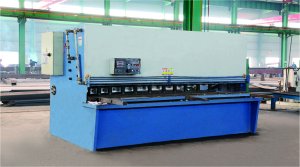
For thin plates needing nothing more than straight cuts, don't overlook shearing. A hydraulic shear cuts a straight line across thin to medium plate faster than any thermal process. The edge is burr-free and immediately ready for forming or welding. It's not glamorous, but for rectangular blanks and simple shapes, the cost per cut is almost impossible to beat.
The real skill in material processing isn't mastering one machine—it's knowing when to switch to another. Matching the process to the thickness keeps quality high and costs where they belong.
For thin gauge material, typically under a quarter inch, laser cutting is hard to beat. The speed is blistering, the edge quality is excellent, and nesting software packs parts tightly to minimize waste. Fiber lasers breeze through this range with minimal heat input, so distortion is rarely a concern. If your parts have delicate features or require welding-ready edges right off the machine, this is your answer.
Things shift when you move into the mid-range, roughly between a quarter inch and one inch. Here, plasma cutting becomes genuinely competitive. Modern high-definition plasma systems deliver impressive cut quality at a fraction of the laser's operating cost on thicker stock. You trade a slightly wider kerf and some edge taper for significantly faster cutting speeds and lower hourly rates. For structural components and weldments that will see secondary finishing anyway, plasma often represents the sweet spot of value.
Once you cross the one-inch threshold, flame cutting takes over as the practical choice. There is a certain brute simplicity to oxy-fuel cutting that remains unmatched in heavy fabrication. It handles plates several inches thick without complaint, requires only basic gas supplies, and the equipment cost is refreshingly reasonable. Edge finish on heavy sections is surprisingly good when parameters are dialed in correctly.
For thin plates needing nothing more than straight cuts, don't overlook shearing. A hydraulic shear cuts a straight line across thin to medium plate faster than any thermal process. The edge is burr-free and immediately ready for forming or welding. It's not glamorous, but for rectangular blanks and simple shapes, the cost per cut is almost impossible to beat.
The real skill in material processing isn't mastering one machine—it's knowing when to switch to another. Matching the process to the thickness keeps quality high and costs where they belong.
 Address: Zhengzhou city in China.
 Phone: 0086-371-86151827
 Email: